
Otters
Mutual action plans both sides can see, with partner health scoring and portfolio analytics. Prices published.
Facts checked against primary sources on 6 August 2026.
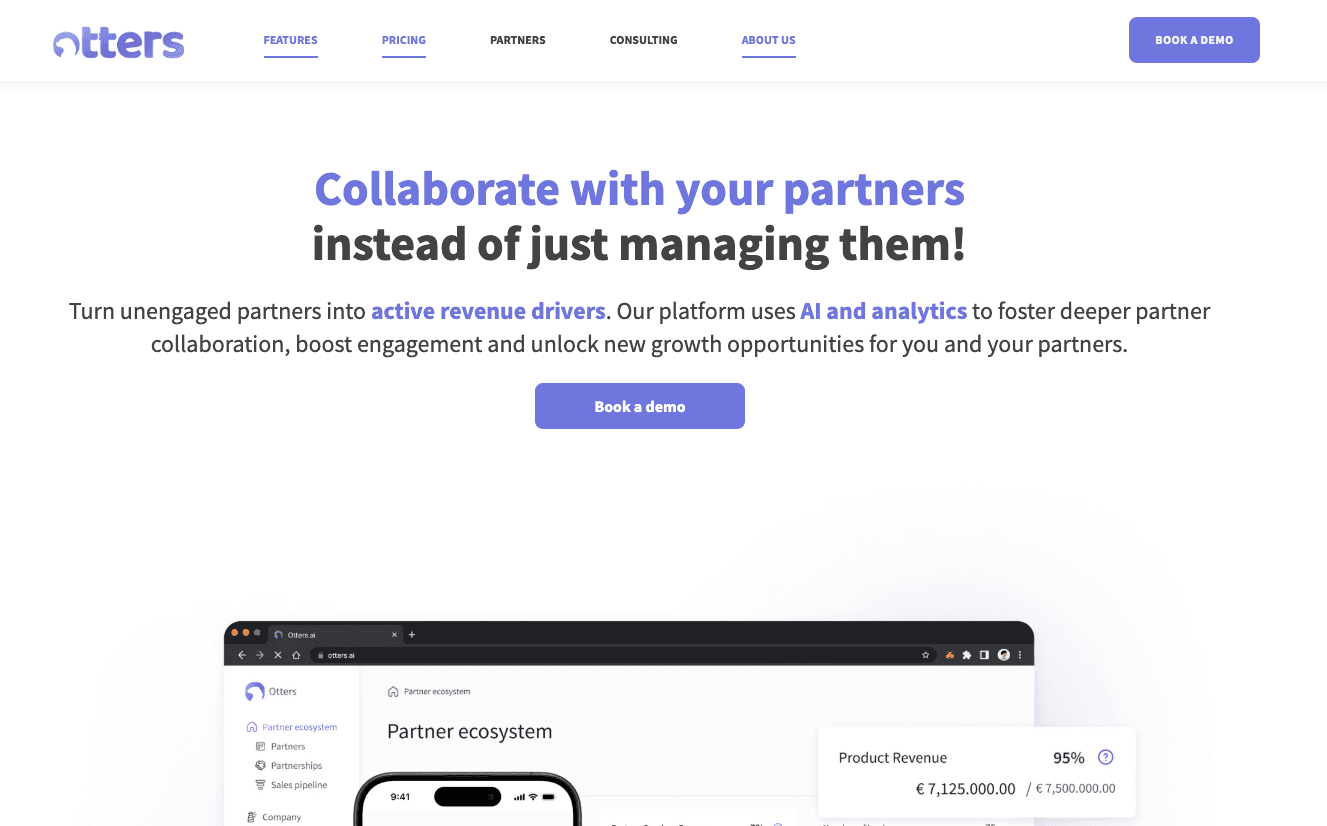
Otters is built around the mutual action plan. A vendor and a partner work from the same document: the same goals, the same activities, the same deadlines, with progress visible to both sides rather than reported by one to the other. Around that sit playbook templates so plans follow a consistent shape, partner records with health scores and tier badges, a kanban deal pipeline with co-sell flags, ecosystem analytics covering portfolio health and top performers, and an AI layer, currently in beta, that watches for engagement dropping and flags churn risk.
What separates it from other collaboration tools
Symmetry. Most partner software is built for the vendor and gives the partner a portal to visit. Otters treats the plan itself as the shared object and designs for both sides seeing it. The problems it lists for partners, being handed tasks without context, chasing status updates, and meeting a different process at every vendor, are the ones partner-side people actually complain about, and few products in this category are designed with them as a user.
The second point is scope discipline. Otters is not trying to be a PRM. There is no MDF, no through-channel marketing, no certification engine and no commission calculation. It does joint planning, execution tracking and relationship health, which makes it a reasonable companion to a PRM rather than a competitor to one.
The trade-off is maturity. The company describes itself as working with early adopters, the AI features are labelled beta, and the customer list is short. That is normal for the stage, but it means roadmap dependency and support capacity are fair things to press on.
Who it fits
Alliance and partnership teams running a manageable number of strategic relationships where a joint plan genuinely exists and needs to be kept honest. It suits deep partnerships better than long-tail programs, which the pricing structure reflects. Customers named include Fujitsu, carbmee, BiG EVAL, Alpha Anywhere, ALTUS, KORTO, PartnerTrybe and Ubility.
Ownership and company background
Founded in 2021 and based in Norwich, United Kingdom. Patrick Hosch handles inbound meetings as founder. The company is early stage and no funding rounds have been announced publicly.
Pricing
Published and checked on 6 August 2026. Start is US$560 a month, billed yearly at US$6,720, covering up to 10 active partners and 500 AI messages a month. Grow is US$1,260 a month, billed yearly at US$15,120, for up to 25 active partners and 3,000 AI messages. Scale is US$2,800 a month, billed yearly at US$33,600, for up to 60 active partners and 10,000 AI messages. Enterprise is quoted. Every tier includes unlimited users and unlimited mutual action plans, and prices can be shown in US dollars, pounds or euros. There is a 14-day free trial with no credit card. Advisory and onboarding time can be bought separately as expert hours, from Otters or from its certified partners.
Integrations
Salesforce, HubSpot, Pipedrive and Microsoft Dynamics for CRM. Slack, Microsoft Teams and email for communication. Zendesk, Freshdesk and Intercom for support. Google Workspace, Notion and custom APIs.
Otters ecosystem
27 companies NotionPartners
 IntercomPartners
 FreshworksPartners
 ZendeskPartners
 SlackPartners
 MicrosoftPartners
 HubSpotPartners
 SalesforcePartners
 SMBPartners
 Professional Executive AssociatesPartners
 PartnerStandardPartners
 Partner TrybePartners
 Animate SearchPartners
 Adriano Bello ConsultingPartners
 KORTOCustomers
 AltusCustomers
 BiG EVALCustomers
 Ubility AICustomers
 carbmeeCustomers
 FujitsuCustomers
 CrossbeamCompetitors
 ImpartnerCompetitors
 PartnerStackCompetitors
 AllboundCompetitors
 ZINFICompetitors
 SupabaseSuppliers
 GoogleSuppliers
 Otters
Drag to move, zoom with the buttons, double-click to reset.
Partners (14)
Competitors (5)
Ecosystem data from Orbit.
Related Collaboration Tools

Builtfirst
Builds the perks marketplace behind venture portfolios and communities, with pre-negotiated deals ready to list

Channlworks
Finds partners from a global index using plain-language search, then onboards and manages them in the same platform

CoPort
Runs partner activation and customer onboarding on the same checklists, for teams too small to run either from a platform