Partnerships Strategy & Operations
Partnership Architecture Framework
The complete 5-model system for building strategic B2B SaaS partnerships. Move from Playbook Practitioner to Partnership Architect.
100s
of "paper partnerships"
that produce nothing
that produce nothing
66%
of partnership value
goes unmeasured
goes unmeasured
6-12mo
for partnerships
to ramp to value
to ramp to value
Why?
Copying playbooks
without principles
without principles
The 5-Model Architecture
Foundation Model
Solves: Terminology chaos, readiness gaps
4 partner categories, 17 partner types, Readiness Assessment, First Principles
Economic Model
Solves: Undervalued programs, weak CFO case
A-C-E-R Total Impact Model, Impact Forecasting, Attribution, Financial Governance
Strategy Model
Solves: Poor selection, misaligned portfolios
Partner Hypothesis, Value Propositions, P2M Motion Matrix, Build/Buy/Partner
Organizational Model
Solves: Wrong structure, no governance
Split Function Model, Structural Trust, Collaborative Competencies, RACI
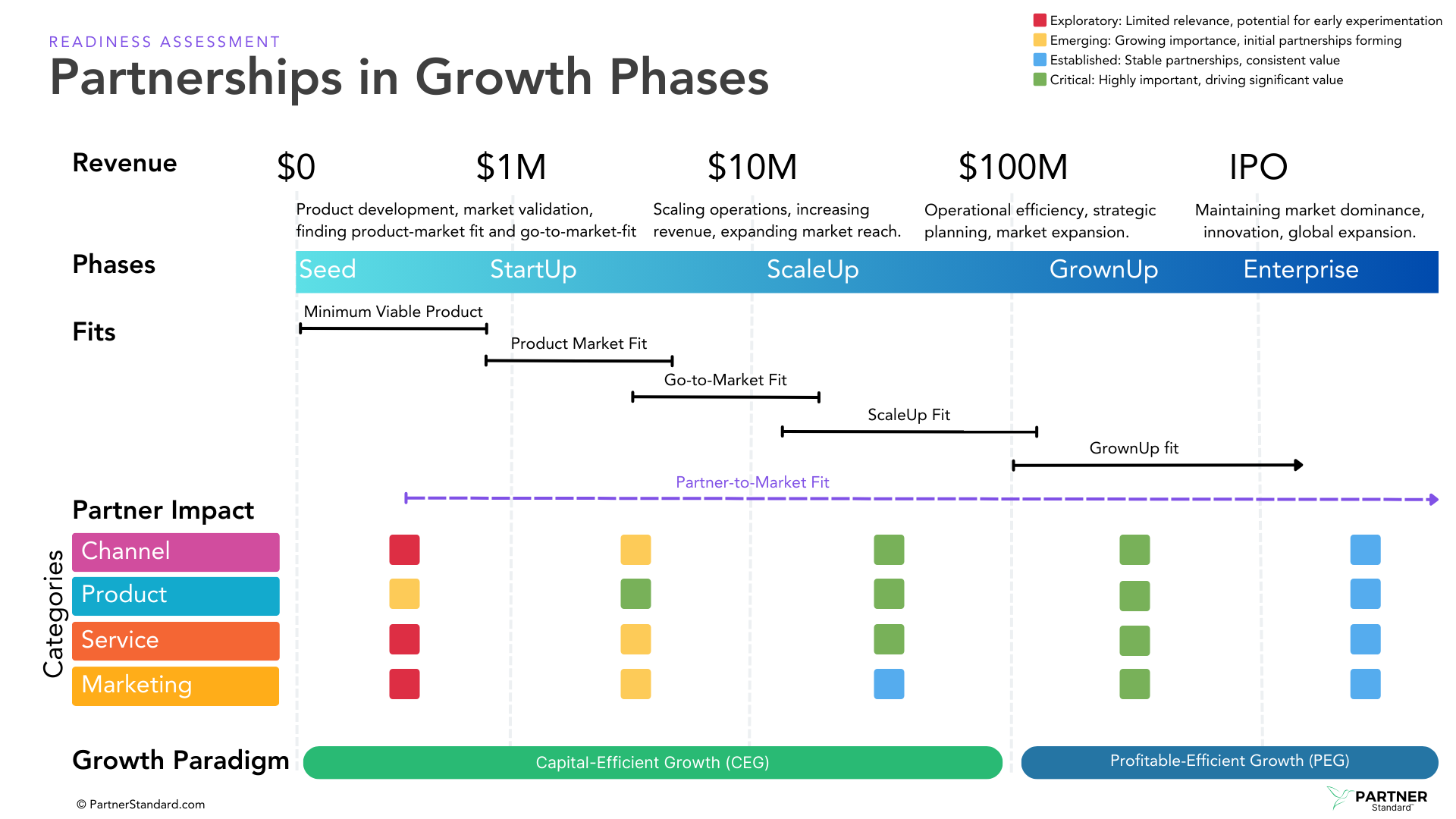
Partnerships in Growth Phases
PMF Stage
Focus: Product partners for co-development and feedback
Avoid: Channel partners (nothing proven to sell yet)
Goal: Validate product-market fit with partner input
GTMF Stage
Focus: Channel, co-marketing, referral partners
Ready: Repeatable sales playbook exists
Goal: Scale customer acquisition through partners
P2MF Stage
Focus: Full ecosystem, partner programs, marketplace
Ready: Partners driving 30%+ of revenue
Goal: Partners as primary growth engine
10 First Principles
Value Creation
Equal Value Exchange
Continuous Adaptation
Sovereign Identity
Knowledge Osmosis
Dynamic Tension
Alignment Sustainability
Structural Trust
System Capacity
Compound Value
Universal laws that govern all partnerships. Design from principles, not playbooks. Explore at FirstPrincipleLed.com
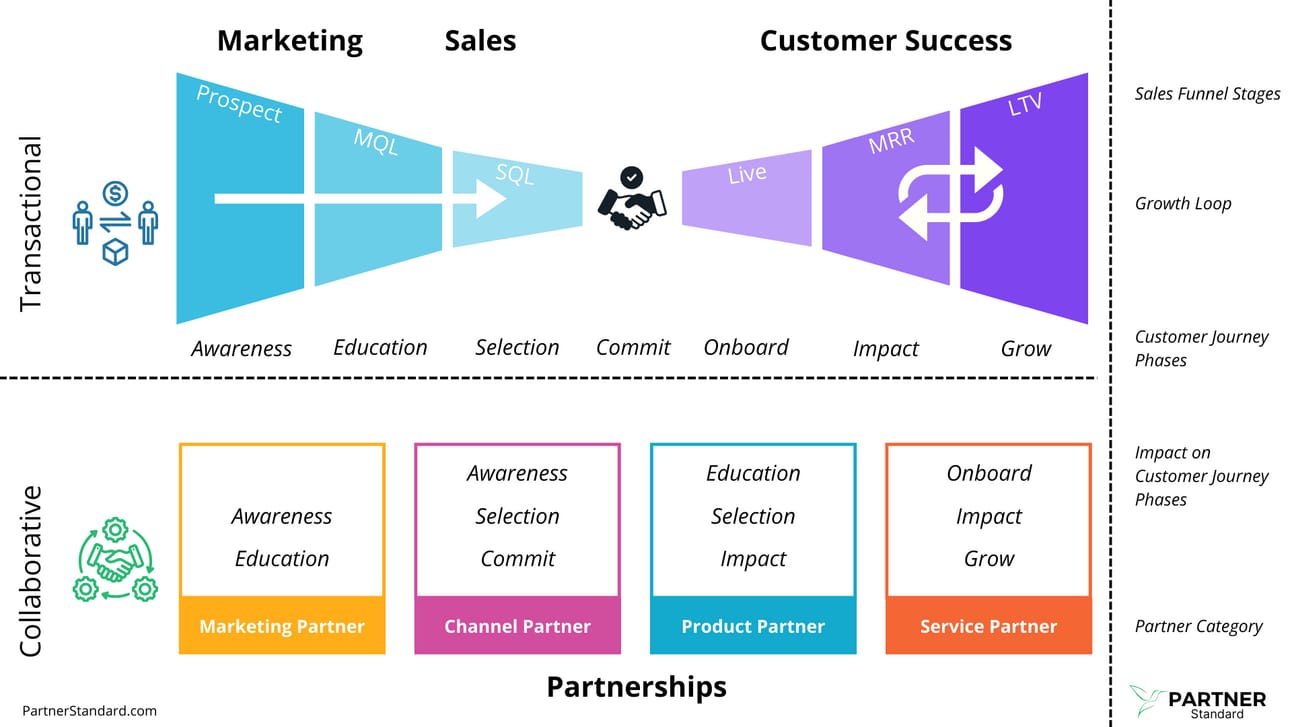
4 Partner Categories, 17+ Types
Channel Partners
Resellers, Distributors, Referral Partners, OEM
Service Partners
Implementation, MSPs, System Integrators, Training
Marketing Partners
Affiliates, Advocates, Co-Marketing, Content Creators
Product Partners
Technology, API Integrations, Data Partners
A structured taxonomy creates common language. So everyone understands each partner's strategic contribution and operational role.
A-C-E-R Total Impacts
Access
New markets, customers, and distribution channels
Costs
Reduced CAC and operational expenses
Efficiency
Faster sales cycles and improved conversion
Revenue
Sourced, influenced, retained, and expanded revenue
Why it matters: Traditional "sourced revenue" captures only 34% of actual partnership value. The Total Impact Model reveals the full picture.
Build, Buy, or Partner?
| Build | Buy | Partner | |
|---|---|---|---|
| Best For | Core competencies | Critical capabilities | Complementary |
| Control | Complete | Post-integration | Collaborative |
| Reversibility | Hard | Very hard | Easy to exit |
| Risk Type | Execution | Integration | Alignment |
Value Positioning Stack
Hypothesis
WHO will partner and WHY it creates mutual value
CVP
Customer Value Proposition: why customers buy your product
PVP
Partner Value Proposition: your offer to recruit partners
JVP
Joint Value Proposition: "better together" story for customers
Team Evolution by Stage
Seed
0-5 partners
Founder-led
Startup
5-25 partners
Full PLC Manager
Scale-Up
25-100 partners
Split Function
Grown-Up
100+ partners
Specialized Teams
Structural Trust Mechanisms
Aligned Incentives
Joint Investments
Mutual Dependencies
Transparent Governance
Performance-Based Benefits
Build trust into the structure, not just relationships. Personal trust doesn't scale.
Implementation Roadmap
Phase 1: Foundation
- Readiness assessment
- Baseline metrics
- Top 5 Partner Hypotheses
Phase 2: Strategy
- PVP and JVP creation
- P2M Motion Matrix
- 30-60-90 day onboarding
Phase 3: Operations
- Lifecycle management
- QBR cadence
- Category-specific ops
Phase 4: Scale
- Team structure evolution
- Rules of Engagement
- Partner NPS tracking

Ready to Architect Your Partnerships?
Access the complete framework with deep-dive guides and templates
pro.partnerstandard.com